|
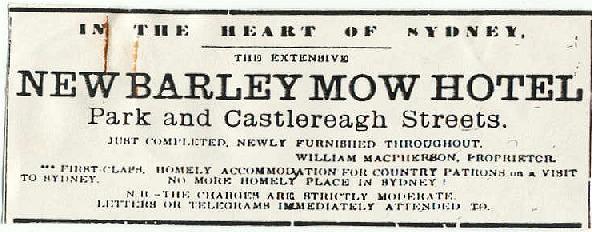
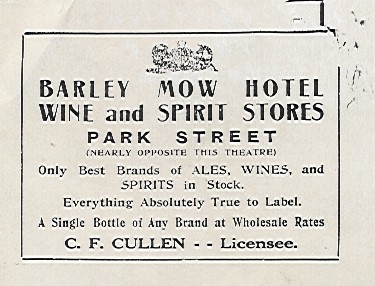
Barley Mow Hotel Park & Castlereagh Streets
|
|
|
Left:
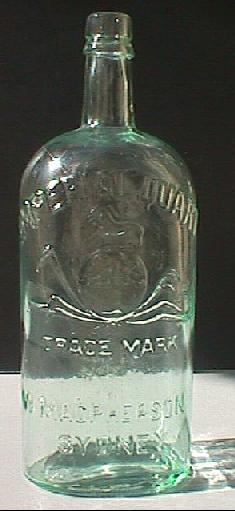
Imperial Quart in clear glass. Applied top. Rare. Embossed on front: "IMPERIAL QUART TRADE MARK REGISTERED W. MACPHERSON SYDNEY". |
|
|
Left:
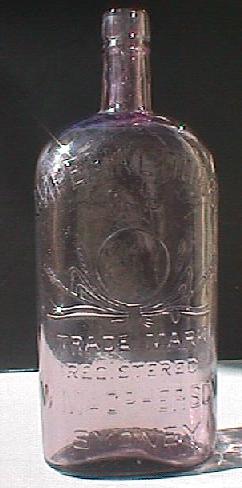
As above. Amethyst. Very rare. |
|
|
| Above, left to right:
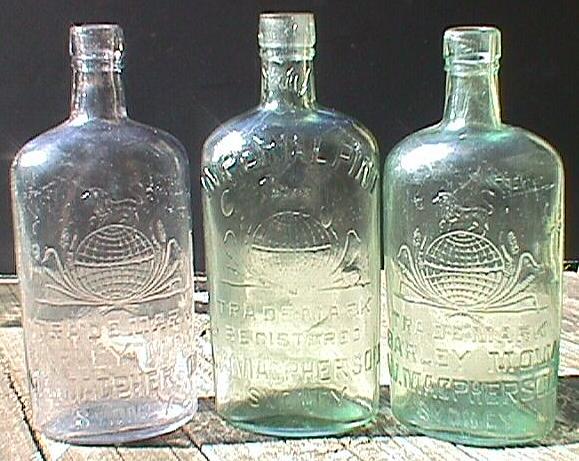
A. Imperial Pint. Amethyst glass, applied top. Rare. Embossed: "TRADE MARK BARLEY MOW W. MACPHERSON SYDNEY" (see close-up below). B. As above, except without "BARLEY MOW". Clear glass. Not rare. (Hard to find in amethyst, though.) Embossed near top: "IMPERIAL PINT". C. As for A. but clear glass.
|
|
|
Left:
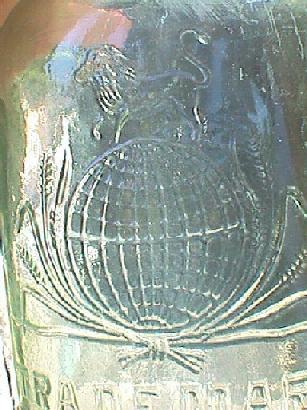
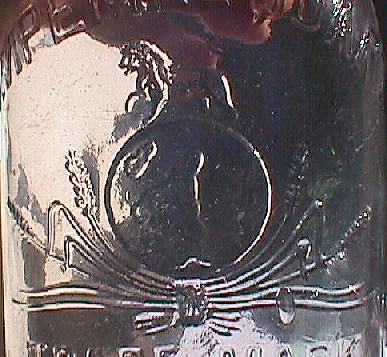
Close-up of trade mark as found on Imperial Pint flask. (world globe with lines of longitude and latitude) |
|
|
Left:
Close-up of trade mark as found on Imperial Quart flask. (world globe displaying stylised continents) |
 |
Left:
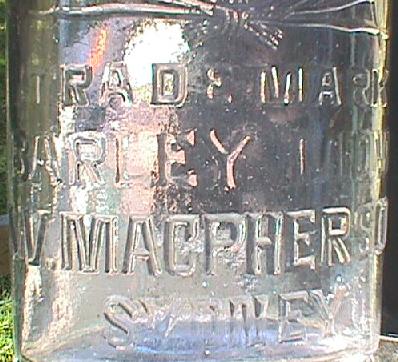
Close-up of rare "BARLEY MOW" embossing as found on A. and C. above. (note: not found on many Imperial Pint examples and not found at all on the Imperial Quart bottles). |
| Barely Mow Hotel:
The first reference to this hotel that I have found is in 1831 - with reference to Catherine McLeod, Publican, Barley Mow, Castlereagh St. It is then listed through the years until 1889, when William Macpherson became the publican. He remained until 1914. The hotel was still operating in 1951, and at that time was called the Barley Mow Family Hotel.
"The Barley Mow Hotel holds the oldest, continuous licence in Sydney. The early Public Gallows was moved around 1804 from near the old Court House to the corner of Park and Castlereagh Street, where the Barley Mow would later stand. The Gallows was moved again several times, but not before one John Green, apparently an African-American, was hung on this spot for rape, as reported in the Sydney Gazette, November 25, 1804."* *Serenade to Sydney, Frank Clune, 1967.
|
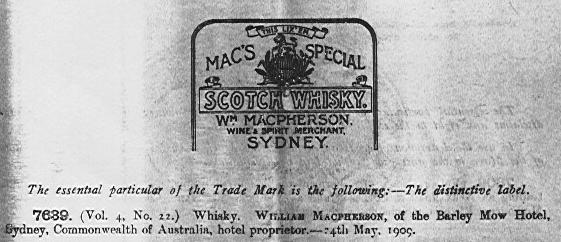
Trademark registration - 1909.
|
Barley Mow Family Hotel Park-Street, Sydney (Newspaper clipping) Mr. Edward Cantor begs leave to inform his friends and the public that he has entered upon the above well-known and well-frequented house, lately in the occupation of Mr. John Barnett. The reputation which this house has long enjoyed in the country districts for the respectable and orderly arrangement of the domestic department, renders it scarcely necessary to say more than that Families and Gentlemen from the country will find the present proprietor anxious to improve, if possible, on the accommodations and attentions to their comfort provided by his predecessor, while, at the same time, he will strive to afford them at the most moderate charges. As an old bushman and squatter, Mr. Cantor addresses himself more particularly to those with whom his long continued and extensive wanderings have brought him in contact. Those friends will know that he is able to form a just estimate of what is needed for relaxation and comfort of the denizens of the bush on their occasional visits to the metropolis, and be fully aware that he will exert himself to meet their wants. To the gentlemen resident in town who have hitherto patronised the house, Mr. Cantor begs to offer his assurance that he intends to maintain the high character that it already possesses. The Wines, Spirits, and every article of consumption, will be of the most superior quality, and in first-rate order. The parlour circle, where intellectual enjoyment has long reigned, not to be met with in establishments of much higher assumption and more expensive resort, will, he trusts, continue to grace the festive board with the wit and good humour which have already rendered it celebrated. Mr. Cantor contemplates a considerable extension of the premises at an early period, when he will notify to his friends what additional accommodation will be at his disposal.
|
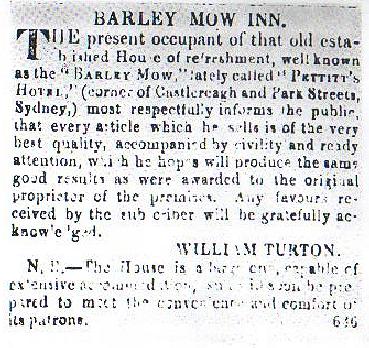
Advertisement from the Sydney Morning Herald, January 12, 1844.